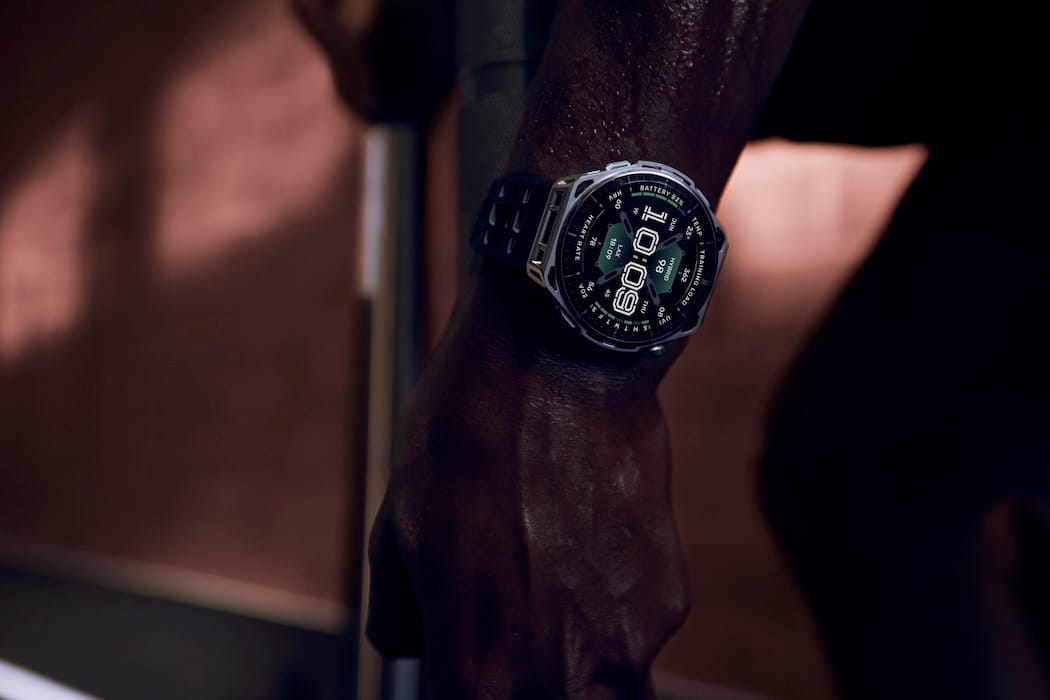
I’ll admit it upfront. I am not a hybrid athlete. I don’t have a HYROX race circled on my calendar and I couldn’t tell you my current VO2 max if you asked nicely. What I do have is a studio apartment with barely enough room for a yoga mat, a habit of alternating between gym sessions and long walks along the Yarra, and a friend who has owned more smartwatches than I’ve had share houses.
So when the Amazfit Balance 3 landed as the brand’s new flagship, I did what any first time buyer should do before spending on a piece of tech that promises to understand your body better than you do. I called my mate Dan.
Dan is the kind of person who reads sensor spec sheets for fun. He has cycled through watches from at least four brands, chasing the one that finally gets his training right instead of just counting his steps and calling it a day. Over coffee, I asked him the question every first timer actually needs answered. What should someone look for in a fitness watch, and does the Balance 3 tick those boxes?
The Three Questions Dan Says You Should Always Ask
Dan’s approach wasn’t about specs for the sake of specs. He broke it down into three questions he asks before buying anything new.
Does it understand more than one type of training? Dan’s biggest complaint about most watches he’s owned is that they’re built for a single discipline. Great for running, clueless about strength work. Great for tracking your lifts, hopeless the moment you go for a swim or a trail run. He said the moment a watch starts asking you to mentally combine data from three different apps just to understand how tired you actually are, it’s already failed the test.
Will the battery survive your actual life? Not the lab conditions. Your life, with travel, forgotten charging cables and multi day training blocks.
Does the data turn into a decision, or just a number? This was the one that stuck with me. Dan said the difference between a toy and a tool is whether the watch tells you something you can act on today. Rest more. Push harder. Back off the run and prioritise recovery. A screen full of numbers with no direction is just noise with good production values.
When I ran the Balance 3 spec sheet past him, this was the watch that finally answered all three questions the way he wanted.
Why This Matters for Someone Like Me
Here’s the thing about being a first time buyer in this category. You’re not choosing a watch for the athlete you wish you were. You’re choosing one for the life you actually live, which for me is a mix of strength sessions, long walks, the occasional run when the weather in Melbourne actually cooperates, and long stretches of sitting at a desk in between.
That’s exactly the profile Amazfit built the Balance 3 for. The brand’s own framing is that people aren’t training one way anymore. It’s strength one day, a long run the next, and recovery squeezed in around work and life. Rather than forcing a single mode of training, the watch is designed to read strength, endurance and recovery as one connected picture.
The centrepiece of that idea is something called HybridCharge, and it’s the feature that made the most sense to me once Dan explained why it mattered. Instead of separately tracking how sore you are, how stressed you are, and how hard yesterday’s session was, HybridCharge folds all three into a single score out of 100, sitting right on the watch face.
It combines BioCharge, which reflects your body’s energy and recovery state, LifeLoad, which factors in real world stress, travel fatigue and illness, and Training Load, which measures the strain from exercise itself. For someone who has never wanted to open three separate apps to figure out whether they should train hard or take it easy, this is the kind of simplicity that actually respects your time.
Who Gets the Most Out of This Watch
Based on the spec sheet and Dan’s read on it, the Balance 3 is best suited to a few specific types of people, and it’s worth being honest about where it shines brightest.
If you’re someone who trains across disciplines, lifting some days, running or cycling on others, with recovery woven in between, this is built for exactly that rhythm. The Weekly Focus and Training Balance features are designed to show whether your training is actually spread across strength, endurance and recovery, rather than quietly skewing toward one at the expense of the others.
If you’re chasing a HYROX race or any kind of hybrid competition, Amazfit’s partnership with the sport means the Balance 3 comes with dedicated preparation tools and race day support, plus post race analysis to help you understand your pacing once it’s done.
If you travel often or your schedule gets chaotic, the Jet Lag Manager and up to 21 days of battery life mean the watch isn’t a source of one more thing to manage. Dan’s second question, about whether the battery survives your actual life, is answered fairly convincingly here.
And if you’re someone who wants coaching built in rather than bolted on, Zepp Coach turns your daily readiness into structured workouts, with a training calendar that syncs to platforms like Strava and TrainingPeaks. For a first time buyer who doesn’t necessarily know how to structure a training week themselves, that’s a meaningful hand to hold.
Where it’s less essential is if your training is genuinely single discipline and unlikely to change. A dedicated marathon runner who never touches a weight rack might get more specific running metrics elsewhere. But for anyone living the messier, multi discipline reality most of us actually train in, this is a watch built for the way training really happens rather than the way it looks in a brochure.
The Practical Details
Price and availability. The Amazfit Balance 3 is available now in Australia in Stainless Steel, with a recommended retail price of A$519 via au.amazfit.com and amazon.com.au.
Display. A 1.5 inch AMOLED display sits under sapphire glass, reaching up to 3,000 nits of peak brightness for full sunlight visibility, at a resolution of 480 x 480.
Build and durability. The stainless steel build has passed six military grade durability tests, with 10 ATM water resistance.
Battery life. Up to 21 days of typical use, or up to 55 hours in Accuracy GPS Mode.
Health sensors. The BioTracker 6.0 PPG sensor covers heart rate, HRV, blood oxygen, stress and sleep tracking.
Positioning and navigation. Dual band GPS with six satellite systems and offline maps.
Storage and connectivity. 64GB of onboard storage for music and podcasts, plus Bluetooth calling, Wi-Fi and Zepp Flow voice control.
Compatibility. Works with Android 7.0 and above, and iOS 15.0 and above, via the Zepp App.
The verdict from someone who isn’t a hybrid athlete…. yet. I went into this conversation expecting Dan to talk me out of a watch this feature dense for someone at my level. Instead, he made the opposite case. The Balance 3 isn’t just for the person already deep into structured training. It’s arguably more useful for someone like me, who trains inconsistently across a few different modes and has never had a clear way to see how it all adds up.
Sometimes the best tech recommendation isn’t the one built for the athlete you’re trying to become. It’s the one that makes sense of the athlete you already are.